The journal
A STUDY IN MARBLE
An exploration of how color, veining, finish, and proportion shape the way marble is experienced within an object and the space around it.A considered look at materials that make a space feel timeless.
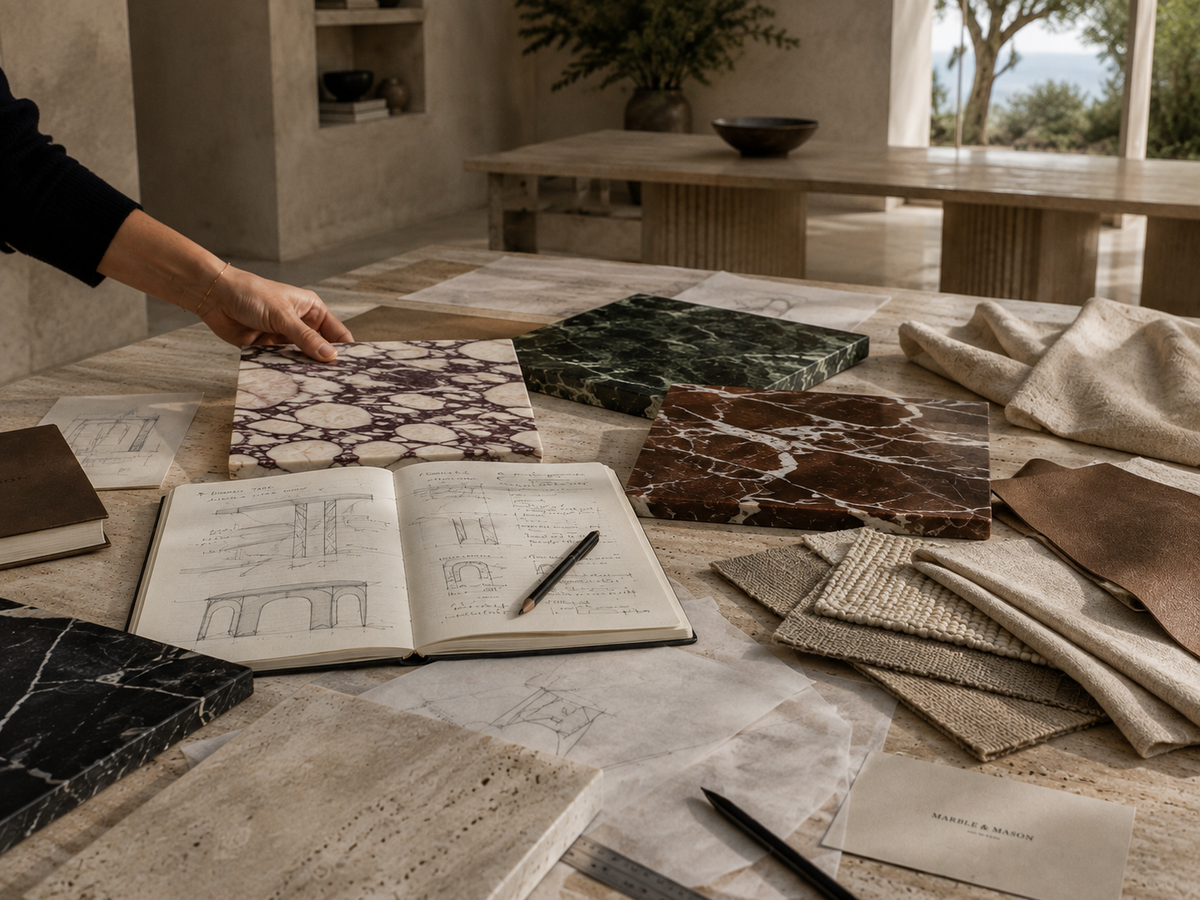
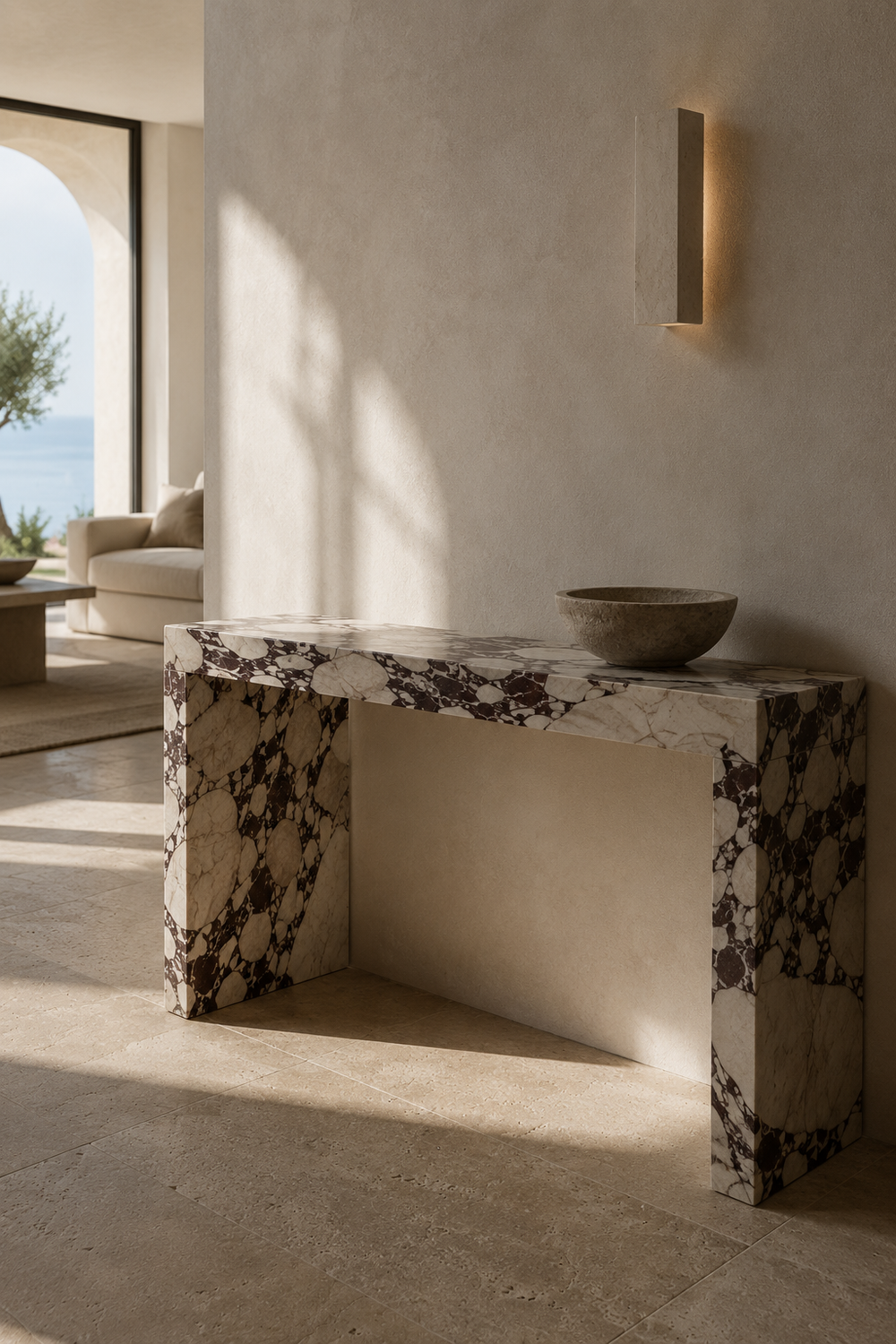
Marble has a presence that extends far beyond its surface. Color, movement, and veining can completely alter the way an object is perceived: a softly toned stone with restrained movement can make a substantial form feel quiet and architectural, while a deeply colored marble with expressive veining can turn even the simplest silhouette into a focal point. The material influences visual weight, mood, and even the way we understand proportion. For this reason, choosing marble is not simply a matter of selecting a beautiful slab—it is a design decision that shapes the character of the object itself.
At Marble & Mason, we consider the stone and the form together. A slab is studied not only for its color or individual markings, but for how its movement will respond to the proportions and geometry of the piece it may become. A broad tabletop offers space for expansive veining to unfold, while a more architectural form may require careful consideration of where movement begins, where it is interrupted, and how it continues across adjoining surfaces. Sometimes the material should command attention; other times, it should quietly support the design. The objective is to find the balance where neither stone nor form overwhelms the other, allowing them to read as one considered composition.
“The right marble does more than finish an object—it becomes part of its form”
The character of marble is shaped not only by its color and veining, but also by the way its surface is finished. A polished finish can intensify color, sharpen contrast, and reflect the surrounding light, giving the stone a more expressive presence. A honed surface softens that effect, revealing the material with a quieter, more tactile quality. The same marble can therefore take on an entirely different character depending on its finish. Choosing between them is less about preference than intention—considering how the surface should feel, how it will interact with light, and what role the finished object should play within its surroundings.
Scale and proportion are equally important. A highly expressive marble used across a large surface can become one of the defining elements of a room, while that same material used in a smaller form may behave more like an accent. At Marble & Mason, we believe the strongest compositions come from knowing when to allow a material to speak and when to exercise restraint. A dramatic stone does not require a complicated form, just as a quieter material can give greater emphasis to silhouette and proportion. Designing with marble is ultimately an exercise in balance: understanding what the material already brings to an object and resisting the impulse to ask it to do too much.
When material and form are considered as one, marble becomes more than a surface—it becomes part of the language of the object.